How to Find Influencers: The Right Creators for Your Online Store (Without an Agency Database)
How to find, vet and approach the right influencers for your online store, choose commission or a flat fee, and measure in Shopify who actually sells.

Jason Spizert
Updated on October 21, 2026
Published 8 min read
The short answer
You can find the right influencers without an agency database in four places: among your own customers, via search and hashtags on Instagram and TikTok, in the creator marketplaces of Meta and TikTok, and in the Shopify app Collabs. More important than finding them is vetting: genuine comments, an audience that fits your store and a style that fits your brand. Then give every creator their own discount code or link in Shopify. The “Sales by discount code” report then shows you who actually sells.
Why small creators often fit better than big names
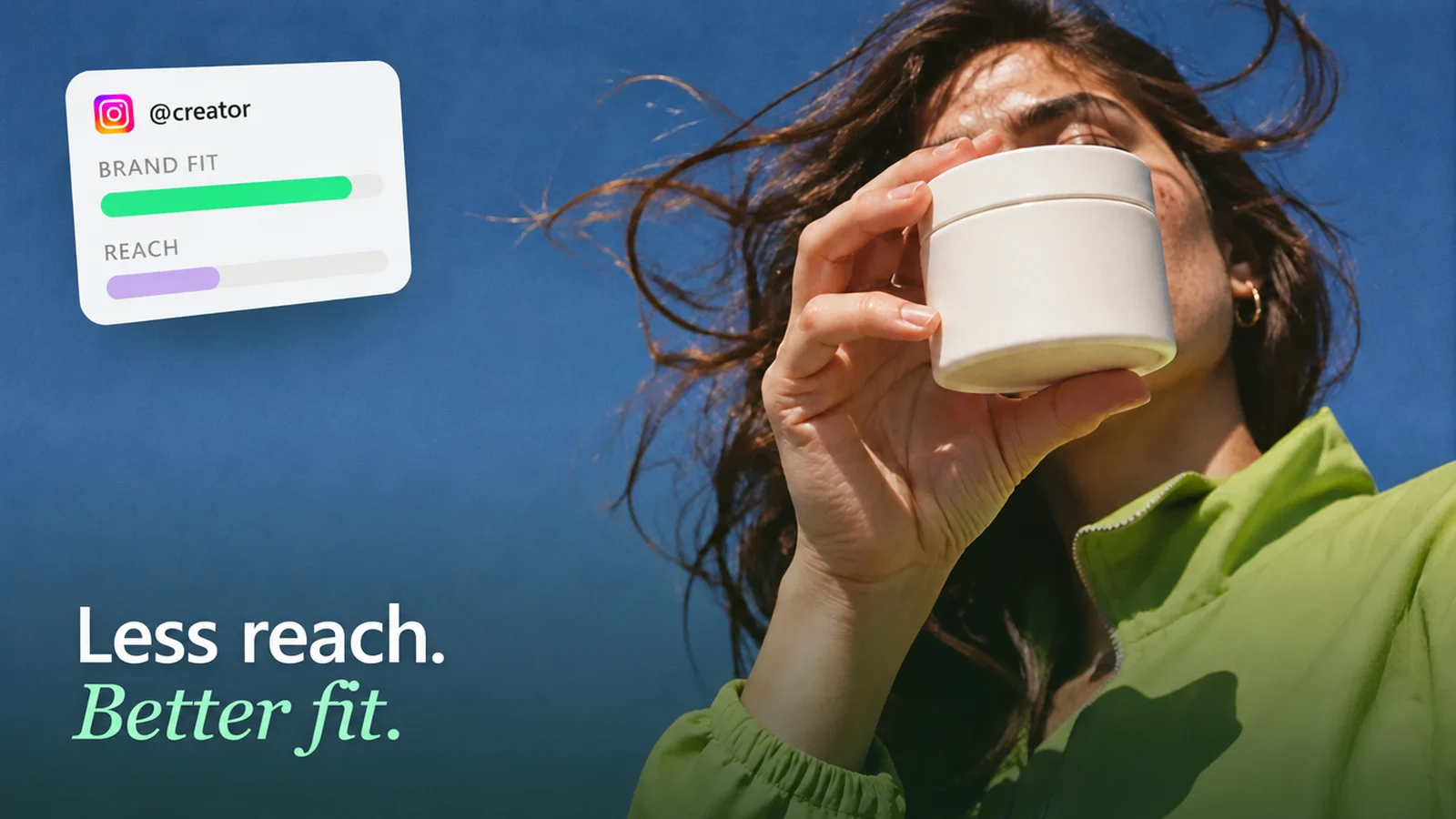
When people look for influencers, they usually look for reach first. For a store, something else matters: how many people in the audience have exactly the problem your product solves?
Our thesis, from running creator programs: audiences immediately assume a famous face is being paid. A small creator who genuinely uses the product is more likely to be believed. They're also willing to deliver content on an ongoing basis rather than a single post. In the end, only your own code can prove it.
Remember
You're not looking for reach. You're looking for people whose audience has your problem.
There's one exception: if you need to make a new category known, a big name can buy attention. That doesn't guarantee sales.
Where do you find the right influencers?
In four places, and the first two cost nothing: among your customers, in Instagram and TikTok search, in the Meta and TikTok marketplaces and in Shopify Collabs. The whole path to reporting looks like this:
 Search, hashtags
 Search, TikTok One
 Creator hub
 CollabsYour customers
 Own discount code and shareable link per creator
| Where to search | What you find there | Access | Catch |
|---|---|---|---|
| Your customers | Tags of your store, reviews with photos, replies to your emails | Immediate, free | Only a few have an audience |
| Instagram: search and hashtags | Hashtag and location pages with all public posts on them | Free in the app | Private accounts missing, lots of manual work |
| TikTok: search | People, posts, sounds and hashtags, with filters to narrow down | Free in the app | No audience data |
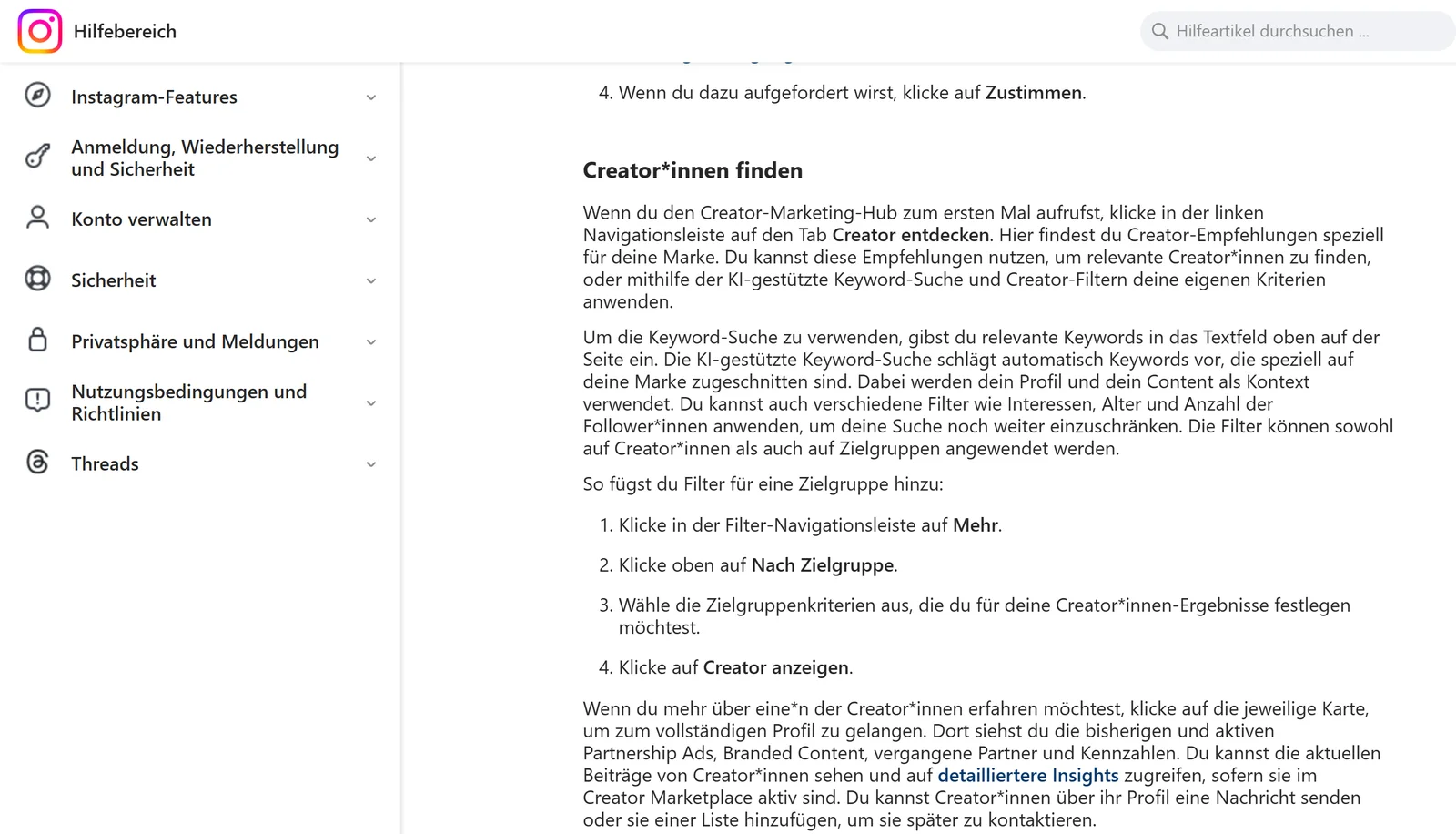
| Meta creator marketing hub | Recommendations, keyword search, filters by interests, age, follower count and audience | Meta Business Suite, verified business portfolio | Detailed insights only for creators in the Creator Marketplace (from 1,000 followers) |
| TikTok One | Filters by country, follower count, language, audience, median views and engagement rate | TikTok One account, creator data separated by region | Creators 18+, for projects from 1,000 followers |
| Shopify Collabs | Search by keyword, location, platform and audience size | Free to install, not on the Starter and Retail plans | Not accepting new creators at the moment |
Start with your customers. Someone who has already bought your product and posts about it doesn't have to act. Look at who tags your store, and ask for photos in your shipping email. A good foundation for this is customer retention: people who like coming back also like recommending.
Then hashtags and search. On Instagram, every hashtag page shows all public posts with that hashtag. Don't search for your product name, but for your customers' everyday life: #commuting instead of #ebike. On TikTok, you narrow the results with filters.
For more speed, the marketplaces. In the creator marketing hub, you filter by interests, age, follower count and audience, see past Partnership Ads and can message creators directly. Whether it's enabled for your brand you can see in Meta Business Suite under creator marketing.
How do you check whether an influencer fits your store?
With three questions: is the engagement real, does the audience fit, does the style fit? The follower count answers none of them. The comments answer the first, an Insights screenshot the second, three recent videos the third.
“In the end, none of them got anything, because on closer inspection they were often brand-new channels without any meaningful followers, and the self-proclaimed stars were just keen on free products.”Store owner, sellerforum.de (translated from German)
Feel free to ask for the Insights screenshot. For the accounts they've reached, Instagram shows creators the top countries, cities and age groups as well as the gender split. Anyone working professionally sends it in a minute.

How do you approach creators so they reply?
Personally, specifically and with a clear offer. A message that obviously went to a hundred accounts rarely gets a reply.
“After ~4 weeks on Shopify Collabs, and a total of 429 total custom emails (probably 30+ hours of time) I've received a total of ~2 or maybe 3 responses.”Merchant, Shopify Community
Lots of emails don't replace selection. Better to write to ten creators whose videos you've actually watched than to three hundred from a list. This is how an outreach message that gets answered is built:
Expectations and disclosure belong in the first message, not a later one. Anyone who agrees after that knows what they're getting into. Anyone who only wants free products usually drops out at this point.
Commission or flat fee: how do you pay influencers?
With commission, as soon as a creator posts themselves and brings buyers via code or link. Then they only earn when something sells and have the same incentive as you. A flat fee fits when you're buying videos you run as ads yourself.
One mistake is especially costly: commission and ad budget for the same video. Then you pay for the same customer twice, once to Meta and once to the creator. What a purchase via ads can cost is calculated in How much do Instagram and Facebook ads cost?
How much commission you can afford depends less on the first purchase than on a customer's value over time. If they buy again, the margin carries more. How to calculate that is in How to calculate customer lifetime value. Market prices for individual videos are in our article on UGC content.
Selling in Germany: does an influencer have to label ads?
In Germany, yes, as soon as they receive consideration for the post: money, commission or a product tied to a post. In 2021, the German Federal Court of Justice ruled that a post made in return for consideration must be recognizable as advertising (judgment of September 9, 2021, I ZR 90/20). Today this is stated explicitly in § 5a (4) of the German Act Against Unfair Competition (UWG), which even presumes consideration.
For you as a store, that means: write the disclosure into the agreement and look at the first posts. If a creator posts without a label, address it right away. This section isn't legal advice. For your agreement, ask a lawyer specializing in media and IT law.
How do you measure in Shopify which creator sells?
With a separate discount code and a separate link for each creator. In Shopify, you create the code under Discounts and get a shareable link via “Promote”. It applies the discount automatically and can lead straight to a product page. The “Sales by discount code” report then shows what was sold via each code. “Total sales by referrer URL” shows which site buyers came from.
“Right now I've just handled it with a discount and then always written down the history so I can pay out the correct commission each quarter. But I don't think that's the ideal solution.”Brand working with athletes, Shopify Community (translated from German)
Shopify Collabs takes the note-taking off your hands. Shopify's free app manages codes, links, gifts and commission and pays out via your Shopify bill. Since it isn't accepting new creators at the moment, it's mainly a tool for creators you invite yourself. Within seven days, you can invite up to 100 creators.
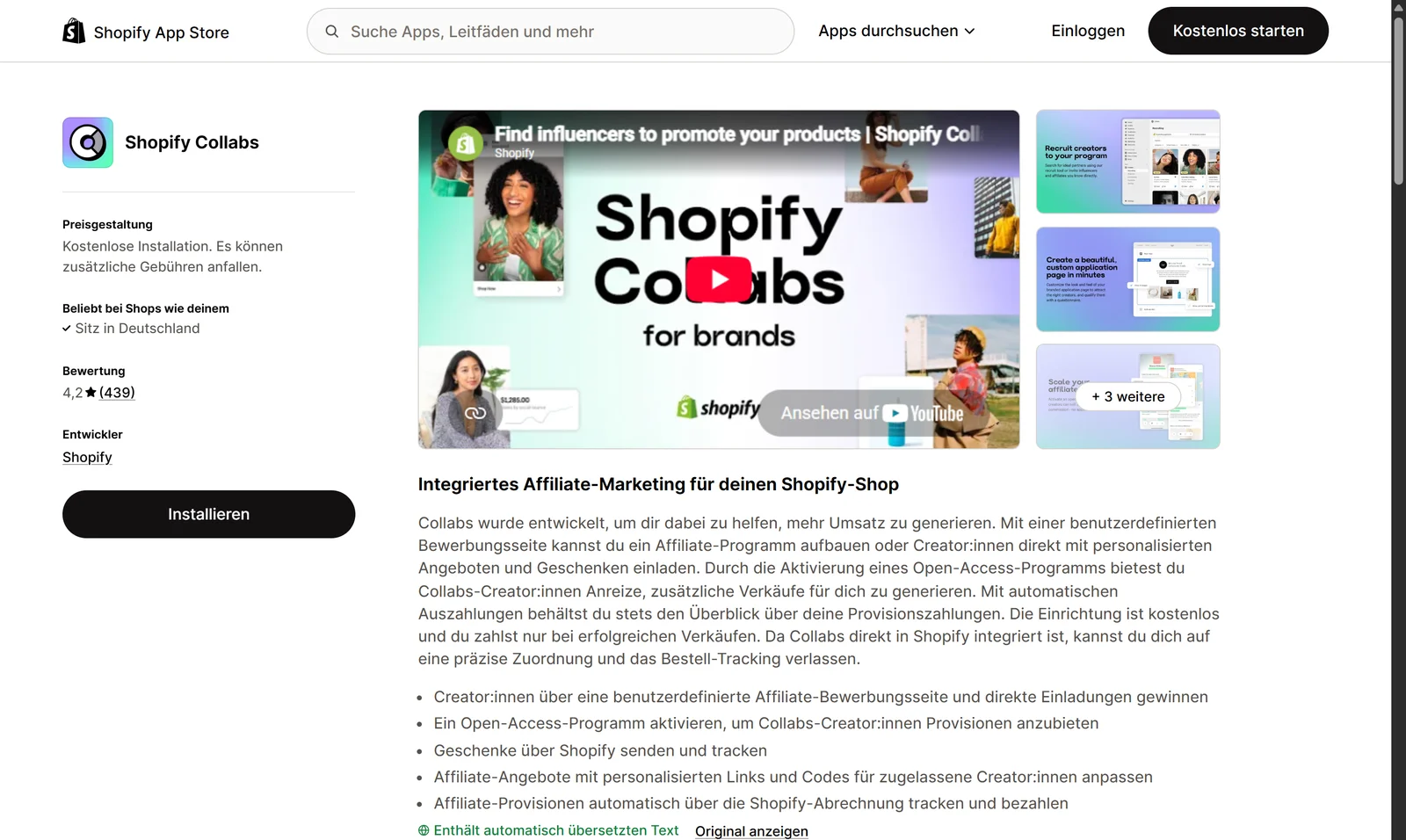
Collabs isn't the only option. Other affiliate apps do the same, often with more settings. What to look for in apps is covered in Shopify apps: which ones your store really needs. If you also want to run the best creator videos as ads, our Meta Ads agency can help.
Influencers are worth it if …
- your product has a visible moment: unboxing, use, before and after.
- your margin supports the discount and commission.
- your store already turns visitors into buyers.
Not yet if …
- visitors come but don't buy. Then every creator click fizzles out too.
- nothing is left after discount and commission.
- nobody looks after the creators, answers their questions and checks the payouts.
Where visitors drop off after the click is covered in Shopify traffic but no sales. Or let us show you on a free call.
Frequently asked questions
Start with your customers, then search via hashtags and search on Instagram and TikTok. If you need more filters, use Meta's creator marketing hub or TikTok One. Then check comments, audience and style before you reach out to anyone.
Yes. Search and hashtag pages on Instagram and TikTok cost nothing, and neither do your own customers. Shopify Collabs is free to install; fees only apply on commission.
Creators with a smaller, usually very topic-focused audience. There is no fixed threshold; platforms and agencies draw the line differently. For a store, the follower count matters less than whether the audience fits your product.
Read the comments across several posts: real followers ask questions and write full sentences. Also ask for a screenshot of their Instagram Insights with countries, cities and age groups.
As a tool for codes, links, gifts and commission, yes, on all plans except Starter and Retail. According to Shopify, however, Collabs isn't accepting new creators at the moment, and only creators from the US, the UK and Canada can join the open program. You invite your own creators directly.
In Germany, usually yes, if a post is expected: according to the guideline of the German media authorities, the product then counts as consideration. The exception is a product in a minor role worth up to €100. For your case, ask a lawyer specializing in media and IT law.
That depends on the model: a flat fee for videos, commission on sales via code or link, or a mix. What's common and what individual videos cost is in our article on UGC content. What you can pay follows from your margin.